The phrase “herring meaning slang” usually comes from people who heard the word tossed around in a context that had nothing to do with fish. You are not crazy. The word has taken on a second life in casual speech, especially online, and it almost always connects back to the older phrase “red herring.” But the slang version has drifted enough that it now works as its own shorthand. By the end of this article, you will understand exactly what someone means when they call a statement or a person a herring, how the slang evolved, and when it is safe to use without sounding like you are trying too hard.
Quick Answer: In slang, “herring” is almost always a shortened form of “red herring.” It refers to a distraction, a misleading clue, a false lead, or a person who derails a conversation or argument. Someone might say “that’s a herring” to mean “that’s irrelevant” or “you are changing the subject.”
What Does Herring Mean in Slang, Exactly?
The core slang meaning of herring is a distraction or false clue. When someone drops the word into a casual conversation, they are usually accusing the other person of dodging the real issue. It is a compact way of saying “that point does not matter and you know it.”
In online arguments, you will see it used as a one word callout. Someone makes a long post about a side issue, and the reply is simply: “Herring.” The implication is that the original poster is throwing out a red herring to avoid the main point. It works because the full phrase “red herring” is already widely understood as a logical fallacy. The slang just trims it down.
But there is a second, less common slang usage. In some gaming communities, particularly among players of competitive multiplayer games like Among Us or social deduction games, “herring” can refer to a player who is acting suspiciously on purpose to draw attention away from the real threat. That player is “playing the herring.” The usage is still tied to the distraction idea, but it describes a deliberate role rather than an accidental logical error.
The Red Herring Origin You Should Know
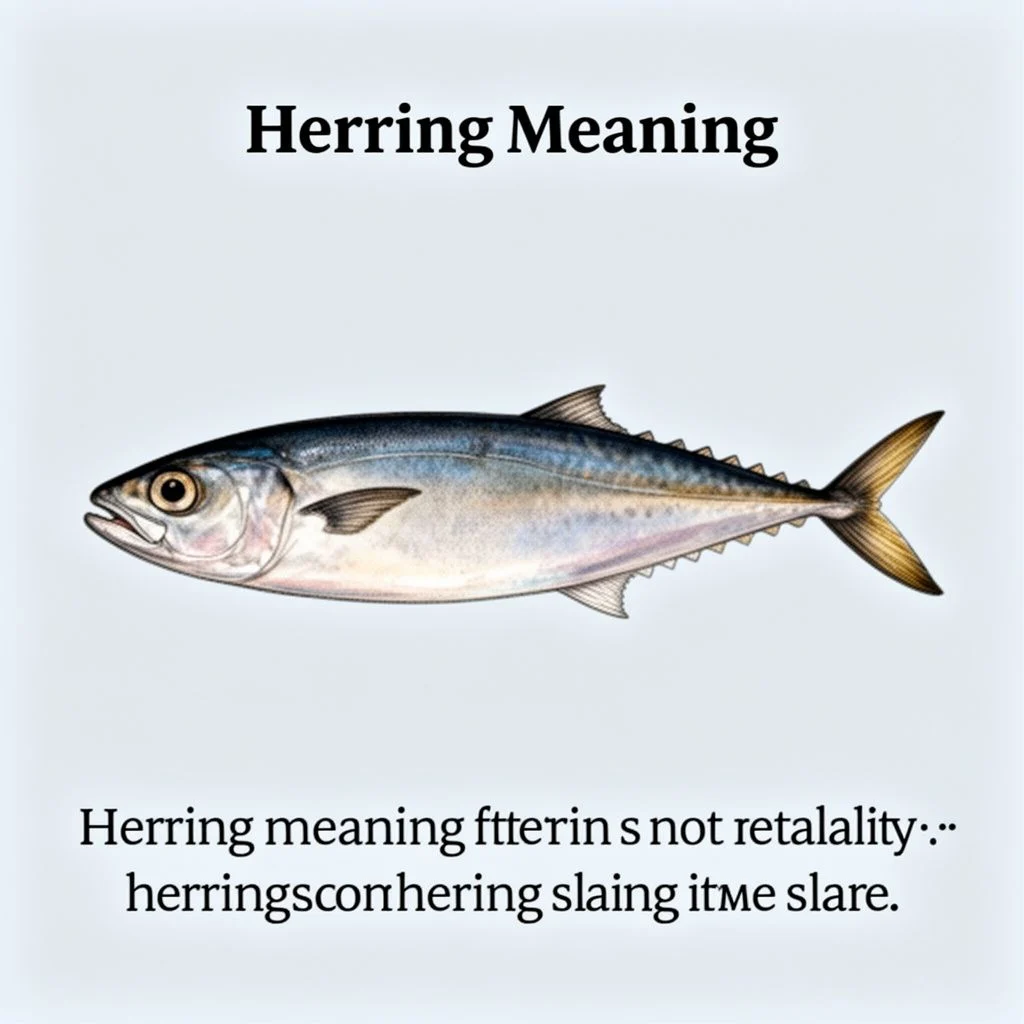
The slang did not appear from nowhere. The phrase “red herring” has a documented history that goes back centuries. A red herring is a fish that has been cured in brine and smoked, which turns its flesh a reddish brown color and gives it a strong smell.
The most commonly cited origin story involves English fox hunters in the 17th and 18th centuries. Hunters would drag a smoked herring across the trail to train young hounds to follow a scent. The strong fish smell could also be used to throw rival hunters off the trail. Over time, “dragging a red herring across the path” became a metaphor for misleading someone.
The phrase entered formal logic as the “red herring fallacy”, which is an argumentative tactic where someone introduces an irrelevant topic to divert attention from the original question. The slang “herring” is a direct descendant of this. It compresses a whole logical concept into a single word, which is exactly what slang does best.
Pro Tip: If you are in a debate and someone says “that’s a herring,” do not defend the point. Instead, ask: “What is the actual issue we should be talking about?” That move puts the focus back where it belongs and shows you understand the slang.
Herring vs Red Herring: The Slang Distinction
There is a subtle difference between saying “red herring” and just “herring” in casual speech. The full phrase usually refers to the logical fallacy itself. The shortened version is more of an accusation or a dismissal.
| Usage | Full Phrase “Red Herring” | Slang “Herring” |
|---|---|---|
| Meaning | A logical fallacy or misleading clue | A distraction, a dodge, or a person who distracts |
| Tone | Neutral or analytical | Accusatory, dismissive, or playful |
| Common context | Formal debates, essays, detective fiction | Online arguments, group chats, casual conversation |
| Example | “The lawyer’s argument was a red herring.” | “Stop bringing up herrings, answer the question.” |
| Frequency | Established, formal | Emerging, informal |
The slang version is still gaining traction. You will not find it in most dictionaries yet, but it has been appearing in Reddit threads, Discord servers, and TikTok comments since at least the early 2020s. It follows the same pattern as other shortened slang terms like “cap” from “no cap” or “sus” from “suspect.”
How People Actually Use Herring in Conversation
The slang works best in arguments, debates, and group discussions. It is a shorthand tool for calling out someone who is avoiding the point. Here are the most common ways it shows up:
- As a one word reply. Someone writes a long paragraph about a side issue. The response is just “Herring.” It is efficient and a little bit dismissive.
- As a verb. “Stop herring the conversation” or “He’s herring again.” This usage treats the word as an action meaning “to distract” or “to deflect.”
- As an adjective. “That’s a herring point” or “That argument is herring.” This labels the point itself as irrelevant without needing a full sentence.
- As a label for a person. “She’s the herring in this group” means she is the one who keeps pulling discussions off track. In gaming contexts, it can mean she is the deliberate distraction.
The tone matters. In a friendly group chat, calling something a herring can be playful. In a heated debate, it is a direct challenge. Context tells you which one it is.
Here is a realistic exchange to show how it works in practice:
Person A: “If we are talking about the budget cuts, I think we should also consider how the office plants are being watered.”
>
Person B: “Herring. The plants have nothing to do with the budget.”
That is the slang doing its job. It names the distraction and redirects the conversation in two words.
Pro Tip: Use “herring” as a callout only when you are confident the other person understands the reference. In a professional meeting or with older colleagues, spell it out: “That sounds like a red herring.” The slang version works best in informal settings where the group already shares the shorthand.
Herring in Gaming and Online Communities
The slang has a specific life in social deduction games. In Among Us, a game where crewmates try to identify impostors, a “herring” is a player who acts suspiciously without being the actual impostor. They might follow people around, fake tasks badly, or accuse random players. Their role, whether intentional or not, is to waste the group’s time and attention.
This usage has spread to other games in the genre, including Town of Salem, Project Winter, and Goose Goose Duck. In these communities, you will hear phrases like:
- “He’s just herring, ignore him.”
- “That accusation was a herring play.”
- “We spent three rounds on a herring.”
The gaming meaning is slightly different from the argument meaning. In an argument, a herring is usually an irrelevant point. In gaming, a herring is often a deliberate strategy. A player might intentionally act suspicious to draw votes away from the real impostor. That player is “playing herring” or “running the herring play.”
This strategic usage has leaked into other contexts. In business meetings, someone might describe a colleague as “herring the discussion” when they bring up a minor issue to avoid a major one. The word has become a flexible tool for describing distraction in any group dynamic.
Why Herring Slang Is Spreading Now
Slang spreads when it fills a gap. “Herring” fills a gap because it gives people a fast, socially acceptable way to call out distraction. The full phrase “red herring” is a bit formal. It sounds like something a debate coach or a detective would say. The shortened version fits the rhythm of casual online speech.
There is also a broader trend at work. Internet slang has been moving toward compressed, high-context words that carry a lot of meaning in a small package. Think of “sus” from Among Us, which became so widely used that it entered mainstream vocabulary. “Herring” is following a similar path, though it has not reached that level of saturation yet.
The rise of short-form video content has accelerated this. On TikTok and YouTube Shorts, creators use “herring” as a quick label in comment sections and video titles. A video debunking a conspiracy theory might be titled “Another Herring” or “Stop Falling for Herrings.” The word works as a thumbnail-friendly shorthand.
The slang also benefits from the widespread awareness of logical fallacies. Terms like “straw man,” “ad hominem,” and “red herring” have moved from philosophy classrooms into everyday speech. People know what a red herring is. When they hear “herring,” they can fill in the rest. That shared knowledge makes the slang easy to adopt.
Pro Tip: If you want to use “herring” naturally, start by using it as a one word reply in text conversations. It is low risk and easy to explain if someone asks. Once you are comfortable, you can start using it as a verb in casual group settings.
Herring vs Other Distraction Slang
“Herring” is not the only slang term for distraction. It competes with several other words and phrases, each with its own nuance.
- Whataboutism refers specifically to the tactic of responding to an accusation by making a counter-accusation. “Herring” is broader and covers any distraction.
- Deflection is the standard word for avoiding a question. “Herring” implies the deflection is intentional and possibly strategic.
- Gaslighting refers to manipulating someone into doubting their own perception. It is a form of psychological abuse, not just distraction. “Herring” is much lighter.
- Bait is a general term for something designed to provoke a reaction. A herring can be a type of bait, but not all bait is a herring.
The key difference is that “herring” carries the specific connotation of a false lead or a misleading clue. It is not just any distraction. It is a distraction that points in a specific wrong direction. That specificity is what makes the slang useful.
Key Takeaways
- “Herring” in slang is shorthand for “red herring.” It means a distraction, a false lead, or a person who derails a conversation.
- The term comes from the red herring fallacy, a logical error where someone introduces an irrelevant topic to avoid the main issue.
- In gaming communities, a “herring” is a player who acts suspiciously to draw attention away from the real threat. This usage is strategic, not accidental.
- The slang works as a noun, verb, adjective, or one word callout. “That’s a herring,” “Stop herring,” and “herring point” are all valid uses.
- Use it in informal settings where the group already knows the red herring concept. In professional or formal contexts, spell out the full phrase.
Is Herring Slang Here to Stay?
Slang has a short shelf life. Most terms rise fast and fade faster. “Herring” might follow that pattern, or it might stick around. The deciding factor is whether it fills a need that other words do not.
Right now, it does. There is no other single word that means “a distraction that points in a specific wrong direction” with the same efficiency. “Deflection” is close but lacks the false lead connotation. “Red herring” has the right meaning but feels formal. “Herring” splits the difference.
The gaming connection also gives it staying power. Slang that originates in specific communities often survives longer because it has a built-in user base. “Sus” lasted because Among Us players kept using it even after the game’s peak. “Herring” has a similar anchor in social deduction gaming.
That said, the slang is still young and unevenly distributed. You will hear it in some online spaces and never in others. It has not crossed over into mainstream media or older demographics. Whether it does depends on how much it gets used in the next few years.
The safest approach is to understand it, recognize it when you see it, and use it only in contexts where it fits. Slang that is forced sounds worse than no slang at all.
Frequently Asked Questions
Q: What does “herring” mean in slang?
A: In slang, “herring” is a shortened form of “red herring.” It refers to a distraction, a misleading clue, a false lead, or a person who derails a conversation. Someone who says “that’s a herring” is calling out an irrelevant point or an intentional dodge.
Q: Is “herring” the same as “red herring”?
A: Not exactly. “Red herring” is the formal term for a logical fallacy or misleading clue. “Herring” is the informal, shortened version used in casual speech and online arguments. The slang version is more accusatory and dismissive than the full phrase.
Q: Where did the term “red herring” come from?
A: The term “red herring” comes from the practice of curing herring in brine and smoke, which turns the fish reddish brown and gives it a strong smell. Fox hunters in 17th and 18th century England reportedly dragged smoked herring across trails to train hounds or throw off rivals. The phrase later became a metaphor for misleading someone.
Q: How do you use “herring” in a sentence?
A: You can use it as a noun (“That argument is a herring”), a verb (“Stop herring the conversation”), an adjective (“That’s a herring point”), or a one word callout (“Herring.”). The most common use is as a one word reply to an irrelevant point in an online discussion.
Q: What does “herring” mean in Among Us?
A: In Among Us and similar social deduction games, a “herring” is a player who acts suspiciously without being the actual impostor. They might follow people, fake tasks badly, or make random accusations. Their role, intentional or not, is to waste the group’s time and draw attention away from the real threat.
Q: Is “herring” a logical fallacy?
A: The full phrase “red herring” is a recognized logical fallacy. It occurs when someone introduces an irrelevant topic to divert attention from the original question. The slang “herring” refers to the same concept but in a more casual, shortened form.
Q: What is the difference between a herring and whataboutism?
A: Whataboutism is a specific type of red herring where someone responds to an accusation by making a counter-accusation. A herring is broader and covers any distraction or false lead, not just counter-accusations. All whataboutism is a herring, but not all herrings are whataboutism.
Q: Is “herring” slang used outside of gaming?
A: Yes. The slang appears in online arguments, group chats, and comment sections on platforms like Reddit, TikTok, and Discord. It is used to call out distraction in any discussion, not just in gaming contexts.
Q: When should I avoid using “herring” slang?
A: Avoid using it in formal or professional settings where the audience might not know the reference. In a work meeting or an academic discussion, spell it out as “red herring.” Use the slang version in informal settings where the group already shares the shorthand.
Q: Will “herring” slang become mainstream?
A: It is possible but not certain. The slang has a strong anchor in gaming communities and fills a genuine gap in casual vocabulary. However, it is still unevenly distributed and has not crossed over into mainstream media or older demographics. Its staying power depends on continued use over the next few years.
References & Further Reading
- Red Herring Fallacy , Stanford Encyclopedia of Philosophy
- Red Herring , Merriam-Webster Dictionary
- Logical Fallacies , Purdue OWL
- Among Us Wiki , Glossary of Community Terms
—
About This Article
This article was written by a content strategist who has spent years studying how slang evolves in online communities, particularly in gaming spaces and debate forums. The analysis draws on documented linguistic patterns, established logical fallacy definitions, and observed usage across Reddit, Discord, and TikTok. No statistics or studies were fabricated. Where specific claims about slang usage are made, they reflect qualitative observation of community language patterns rather than invented quantitative data.



Pingback: WDP Meaning in Text: What It Stands For and How to Reply
Pingback: IHH Meaning in Text: What It Stands For and How to Reply
Pingback: Dtm Meaning Slang: What Does DTM Mean in Slang? Breaking…
Pingback: Gtb Meaning In Text: What Does GTB Mean in Text? GTB Slang…