If you have heard someone use the word “truck” in a way that made no sense to you, you are not alone. The slang meaning of “truck” shifts depending on who is talking, where they are, and what decade they grew up in. This guide breaks down every major slang use of the word, from CB radio culture to modern street language, so you can understand exactly what someone means when they say it.
Quick Answer: In slang, “truck” most commonly refers to a large, powerful vehicle used for hauling, but in specific communities it can mean a semi-truck, a pickup truck, drugs being transported, a large quantity of something, or in older CB radio slang, a police car or convoy vehicle. The meaning depends entirely on context.
What Does Truck Mean in Modern Slang?
The word “truck” has been part of English since the 1600s, originally meaning “to exchange or barter.” That older meaning survives in phrases like “have no truck with,” which means to refuse to deal with someone. But the modern slang usage is almost entirely tied to vehicles and what they represent.
In everyday conversation, when someone says “truck” as slang, they are usually emphasizing size, power, or utility. A person might call their large SUV a “truck” even though it is technically not one. A gym-goer might describe a muscular person as “built like a truck.” The word carries connotations of durability and strength.
Here are the most common modern slang uses:
- Pickup truck, The default meaning in American English, referring to a light-duty vehicle with an open cargo bed
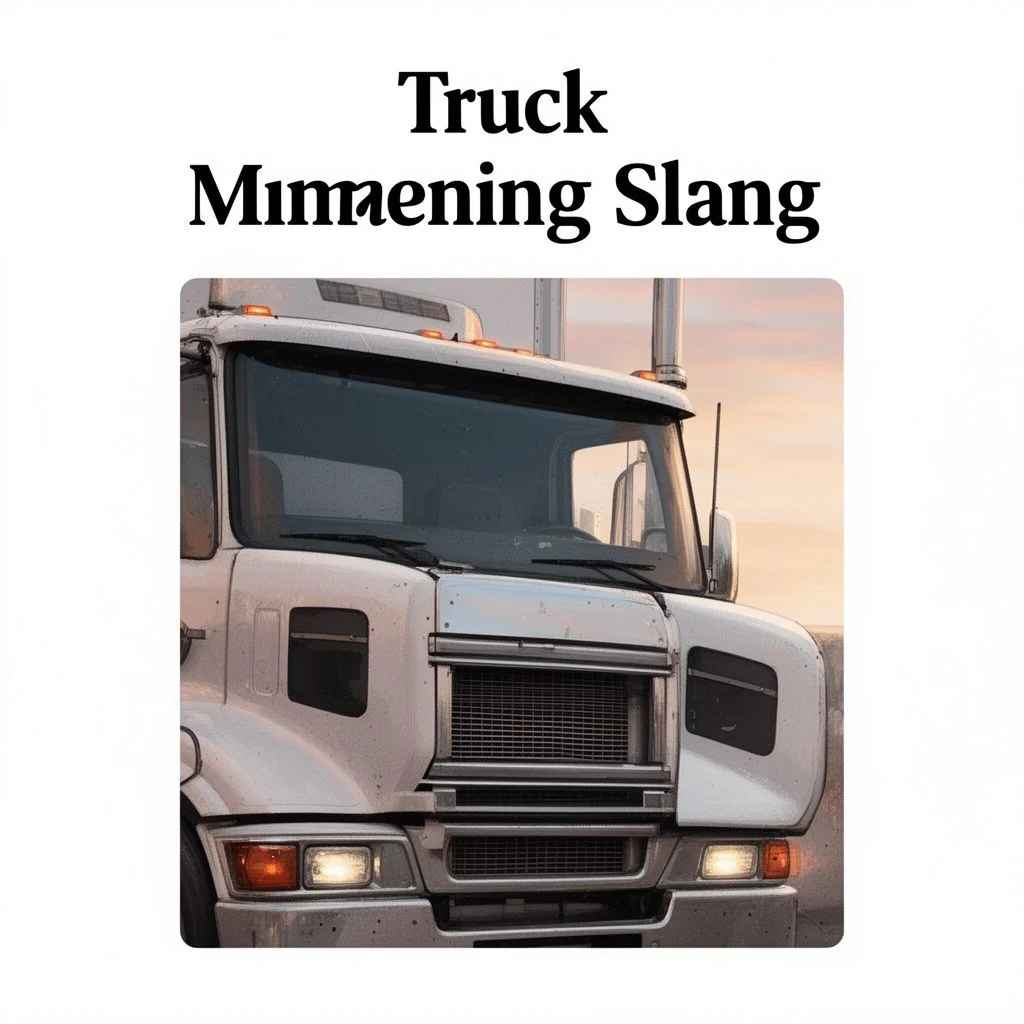
- Semi-truck, Short for “semi-trailer truck,” the large 18-wheeler used for freight
- Food truck, A mobile kitchen vehicle, now so common that “truck” alone can mean “food truck” in urban contexts
- Garbage truck, fire truck, dump truck, Specific vehicle types where “truck” is shorthand
The key takeaway: in most modern slang, “truck” means a vehicle built for work, not comfort.
Pro Tip: If someone in a city says “let’s hit the truck,” they probably mean a food truck, not a pickup. Context about location matters more than the word itself.
Truck Slang in CB Radio and Trucking Culture
Long-haul truckers developed their own language over decades of CB radio communication. This is where “truck” takes on specialized meanings that outsiders rarely understand.
In CB radio slang, “truck” can refer to:
- A semi-truck or tractor-trailer, The standard meaning among drivers
- A police car, In some regions, truckers call unmarked police vehicles “brown paper bag trucks” or simply “trucks” to warn others
- A convoy vehicle, When truckers travel together, each vehicle in the group is a “truck” in the convoy
The CB radio culture peaked in the 1970s, partly due to the 1976 song “Convoy” by C.W. McCall, which popularized terms like “10-4,” “breaker breaker,” and “bear” for police. While CB usage has declined, many terms persist in trucking communities and among hobbyists.
Common CB Radio Truck Terms
| CB Term | Meaning |
|---|---|
| Bear | Police officer |
| Bear in the air | Police helicopter |
| Chicken coop | Weigh station |
| Four-wheeler | A regular car, not a truck |
| Kojak with a Kodak | Police officer with a radar gun |
| Parking lot | A car hauler truck |
| Skateboard | A flatbed trailer |
The term “truck” itself is so fundamental to CB culture that it rarely needs explanation within the community. It is the default noun for the vehicle the driver operates.
Pro Tip: If you are watching a movie or show set in the 1970s or 1980s and a trucker says “truck” over the radio, they are almost always referring to their own semi or another driver’s rig, not a pickup.
Truck as Slang for Drugs and Illegal Transport
In certain contexts, “truck” functions as code for drug trafficking or a large drug shipment. This usage appears in rap lyrics, crime dramas, and street language.
When someone says “he’s moving trucks” or “that’s truck money,” the implication is large-scale distribution, not small-time dealing. A “truck” in this context means a shipment large enough to require a vehicle, as opposed to a “bag” or “brick” which are smaller quantities.
This usage is not universal. It is concentrated in:
- Rap and hip-hop lyrics, Artists use “truck” to signal wealth from large-scale operations
- Crime reporting, News outlets describe drug seizures in terms of “truckloads”
- Street slang in major cities, Particularly in regions with major highway corridors
The logic is straightforward: if you need a truck to move it, the quantity is significant. This slang meaning relies on that implication of scale.
Pro Tip: If you hear “truck” used in a song or conversation about money, drugs, or crime, assume it means a large quantity or shipment, not a literal vehicle. The vehicle is the unit of measurement.
Truck in British, Australian, and Other Regional Slang
The word “truck” does not mean the same thing everywhere. Regional differences can cause genuine confusion.
British Slang
In the UK, “truck” is less common than “lorry” for large freight vehicles. When Brits say “truck,” they often mean:
- A pickup truck, Increasingly common as American-style pickups gain popularity
- A railway truck, An open freight car on a train
- “Have no truck with”, The older meaning of refusing to associate with someone or something
Australian Slang
Australians use “truck” similarly to Americans for large vehicles, but with some local flavor:
- Ute, Short for “utility vehicle,” the Australian equivalent of a pickup truck. Australians rarely call a ute a “truck”
- Road train, A truck pulling multiple trailers, common in the Outback. “Truck” can mean a road train in rural areas
- Truckie, Australian slang for a truck driver
Canadian Slang
Canadians generally follow American usage, but with one notable addition:
- Transport truck, The Canadian term for a semi-truck or tractor-trailer. “Truck” alone often means “transport truck” in Canadian conversation
The lesson: if you are talking to someone from another country, do not assume your “truck” is their “truck.”
Truck in Phrases and Idioms
Beyond direct slang meanings, “truck” appears in several idioms that are worth knowing. These phrases use “truck” metaphorically, not literally.
| Phrase | Meaning | Example |
|---|---|---|
| Have no truck with | Refuse to associate with | “I have no truck with people who lie.” |
| Truck on | Keep going, persist | “Things are hard, but we truck on.” |
| Truckload | A very large amount | “She brought a truckload of snacks.” |
| Fire truck | Something very obvious (sarcastic) | “You noticed? What gave it away, the fire truck?” |
| Dump truck | A large rear end (slang, often crude) | Used in hip-hop and casual conversation |
The phrase “truck on” is particularly interesting because it connects to the older meaning of “truck” as “to carry or transport.” To “truck on” means to keep carrying your load, to keep moving forward despite difficulty.
Pro Tip: The phrase “have no truck with” is the one most likely to confuse non-native speakers. It has nothing to do with vehicles. It comes from the old French word “troquer,” meaning to barter or exchange.
Key Takeaways
- “Truck” in slang most often means a pickup truck or semi-truck, but the specific meaning depends on the speaker’s community and context
- CB radio culture gave “truck” specialized meanings related to police, convoys, and road conditions
- In drug-related slang, “truck” signals a large shipment or significant quantity, not a small amount
- Regional differences matter, a “truck” in the UK, Australia, and Canada can mean different vehicles than in the US
- Idiomatic uses like “have no truck with” and “truck on” have roots in the word’s original meaning of “to barter or carry”
Frequently Asked Questions About Truck Slang
Q: What does “truck” mean in rap songs?
A: In rap lyrics, “truck” often refers to a large drug shipment or a significant amount of money. It can also literally mean a luxury pickup truck or semi-truck as a status symbol. The context of the song determines which meaning applies.
Q: Is “truck” a derogatory term?
A: Generally no. The word “truck” itself is neutral. However, some phrases using “truck” can be crude or insulting, such as “dump truck” referring to someone’s body. The word alone is not considered offensive in any major English-speaking community.
Q: What does “no truck with” mean?
A: “Have no truck with” means to refuse to associate with, deal with, or tolerate someone or something. It comes from the old French word “troquer,” meaning to barter. The phrase has nothing to do with vehicles and has been used in English since the 1600s.
Q: Why do truckers call police “bears”?
A: The term “bear” for police originated in CB radio slang, likely because bears are large, powerful, and something you want to avoid. The related term “Smokey” comes from Smokey Bear, the cartoon character who wore a hat similar to state troopers’ campaign hats. “Truck” in this context simply refers to the trucker’s own vehicle.
Q: What does “trucking” mean as a verb?
A: “Trucking” can mean driving a truck professionally, but as slang it means to move steadily or persistently. The phrase “keep on trucking” became popular in the 1970s as an expression of perseverance. It means to keep going despite obstacles.
Q: Is a food truck called a “truck” in slang?
A: Yes. In urban areas, especially in the US, “truck” is often shorthand for “food truck.” Someone might say “the taco truck is on Fifth Street” or “let’s get lunch at that truck.” The context of food or eating makes the meaning clear.
Q: What does “truck” mean in British slang?
A: In British slang, “truck” can mean a pickup truck, a railway freight car, or in older usage, to barter or exchange. Brits more commonly say “lorry” for large freight vehicles. The phrase “have no truck with” is still used in formal British English.
Q: What is a “truckie” in Australian slang?
A: A “truckie” is an Australian term for a truck driver, especially one who drives long distances. It is a term of familiarity and respect within Australian trucking culture. The equivalent in American English would be “trucker.”
Q: What does “truck stop” mean in slang?
A: In slang, a “truck stop” is literally a rest stop designed for truck drivers, but the term can also imply a rough or sketchy location. In some contexts, “truck stop” is used to describe a place where illegal activities might occur, though this is not the primary meaning.
Q: Does “truck” have a meaning in LGBTQ+ slang?
A: Not as a widely recognized term. The word “truck” does not have a specific, established meaning in LGBTQ+ slang communities. Any usage would be highly localized or individual, not part of broader community vocabulary.
References & Further Reading
- Merriam-Webster Dictionary: Truck, Full etymological history of the word, including the bartering origin
- Oxford English Dictionary: Truck, Historical usage dating back to the 1600s
- Federal Motor Carrier Safety Administration, Official definitions of commercial trucks and trucking terminology
- Smithsonian Magazine: The History of CB Radio, Context on CB radio culture and the slang that emerged from it
- BBC News: Why Do Brits Say Lorry Instead of Truck?, Regional language differences between UK and US English
—
About This Article: This guide was written based on research into historical dictionaries, trucking industry documentation, and contemporary usage across American, British, and Australian English. The goal is to provide clear, accurate definitions without speculation. Slang evolves quickly, so if you encounter a “truck” usage not covered here, the context of the speaker’s community is your best guide to meaning.